


Exploration and the space connection

During the height of the Covid pandemic in July 2020, NASA launched the Perseverance Rover. I watched this launch. I watched the entire thing. Watching rocket launches is not really my thing; perhaps it was the isolation and dislocation brought on by the Covid lockdowns that brought me closer to the event. As if it was important for me to see NASA continuing to advance science despite what else what going on in the world. I was captivated.
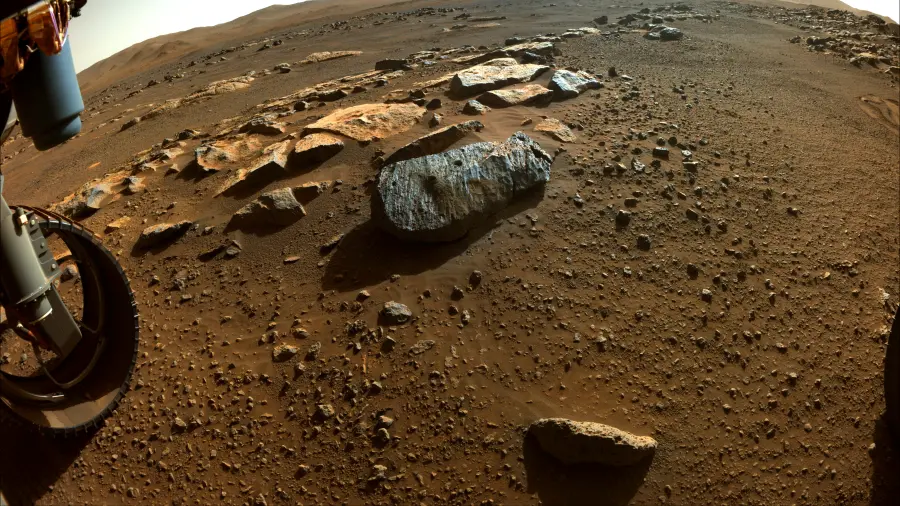
And so I followed the journey of the rover through that year as it travelled towards the Red Planet until once again I was transfixed to the screen in February 2021 to witness as Perseverance landed on the surface of Mars. Seeing the lander getting closer and closer to the surface, the red dunes, craters and cliffs becoming clearer before the final hundred meters of sand and dust blown up from the lander rockets, before the final touchdown... it was exciting stuff!
To think of that little robot landing in the vastness of a Martian crater system, and the silence that would have followed the initial rush of the landing, still puts shivers down my spine.
Since then Perseverance has traversed some 30 kilometers, and has collected many samples of Martian rock and regolith to better understand the new world.


Satellite systems go
Last week, 15th January 2025, I woke up at 4am to make my way to the Fleet Space Technologies headquarters to watch the launch of a smaller payload from a different space base in the US. Bleary-eyed, I watched the seamless launch of a SpaceX rocket that was carrying not one but two satellites, Centauri VII and VIII, that were built by Fleet Space in Adelaide. This launch is very significant for the company; you can find more information about that here, but I won't dwell on that.
The rocket blasted off into a curved flight speeding away from the Californian coast with the transport module reaching into Low Earth Orbit (LEO) and the booster stage falling then descending gracefully back to Earth. Along with the team who had designed the components of Centauri VII and VIII, I watched with baited breath as the rocket reached its maximum height and the began to eject the various cargo one by one into orbit. The Fleet Space satellites were towards the back of the payload so we had to wait until an hour or so into the flight before we saw the grainy footage of a box being flung out into space, much to the relief of everyone watching!

Reflections on exploration
Watching the launch live made me reflect on the attitude of exploration. Why would you go to all that effort to put robots, and people, into space? What drives us to explore new worlds, to go beyond the familiar and sometimes put ourselves in danger? There can be many reasons of course, from the glorious (survival and self-sacrifice) to the banal (ego-driven self aggrandisement) and likely there is a mix of motivations in any expedition. Every step in an exploration context requires a boldness, a courage, and a willingness to step into the unknown in some way. There's a reward that the risk of exploration promises, and that reward is a powerful driver for explorers. Exploration can be driven by innate curiosity and the desire for new knowledge. Exploration can be a thrill, exploring the boundaries of physical or mental capability. Exploration can be about seeking a financial gain through being the first to do something difficult, or find something valuable.
Technical advances are often the outcome of exploration, and they are also enablers. Necessity for new technologies for survival driven by the needs of a mission can spark incredible creativity and feats of design. Those new designs can themselves enable new feats of exploration.
Mineral exploration, as an example of exploration close to home for me, encompasses all of these no doubt. The challenge is incredible and no-one within the industry underestimates just how difficult a task it is to find a metal accumulation in the ground, buried beneath shifting sands.
However, the thrill of poring over data, especially new data, to find a valuable and useful thing is itself a reward that keeps the optimistic among us gainfully employed in the industry. It certainly got me out of bed at 4am to watch a satellite launch.
And that will also keep me tracking the journey of Perseverance. Because Perseverance is, at its heart, a geologist taking the most remote field trip ever.


Comments